Many healthcare students spend hours reading notes and highlighting textbooks, only to feel unsure when faced with a real case. Clinical diagnosis is not just about knowing facts. It is about using them to solve problems. That is why how you study matters as much as how much you study.
Why Memorization Alone Is Not Enough
Memorizing lists of symptoms and conditions can help you pass a quick quiz, but diagnosis requires connecting information. In real cases, symptoms overlap, patients describe things in different ways and the answer is rarely obvious. Passive reading does not build the thinking skills you need.
What Is Active Practice?
Active practice means testing yourself and applying knowledge instead of just reviewing it. You retrieve information from memory, make decisions and get feedback. This process strengthens memory and builds clinical reasoning at the same time.
Active Study Methods That Work
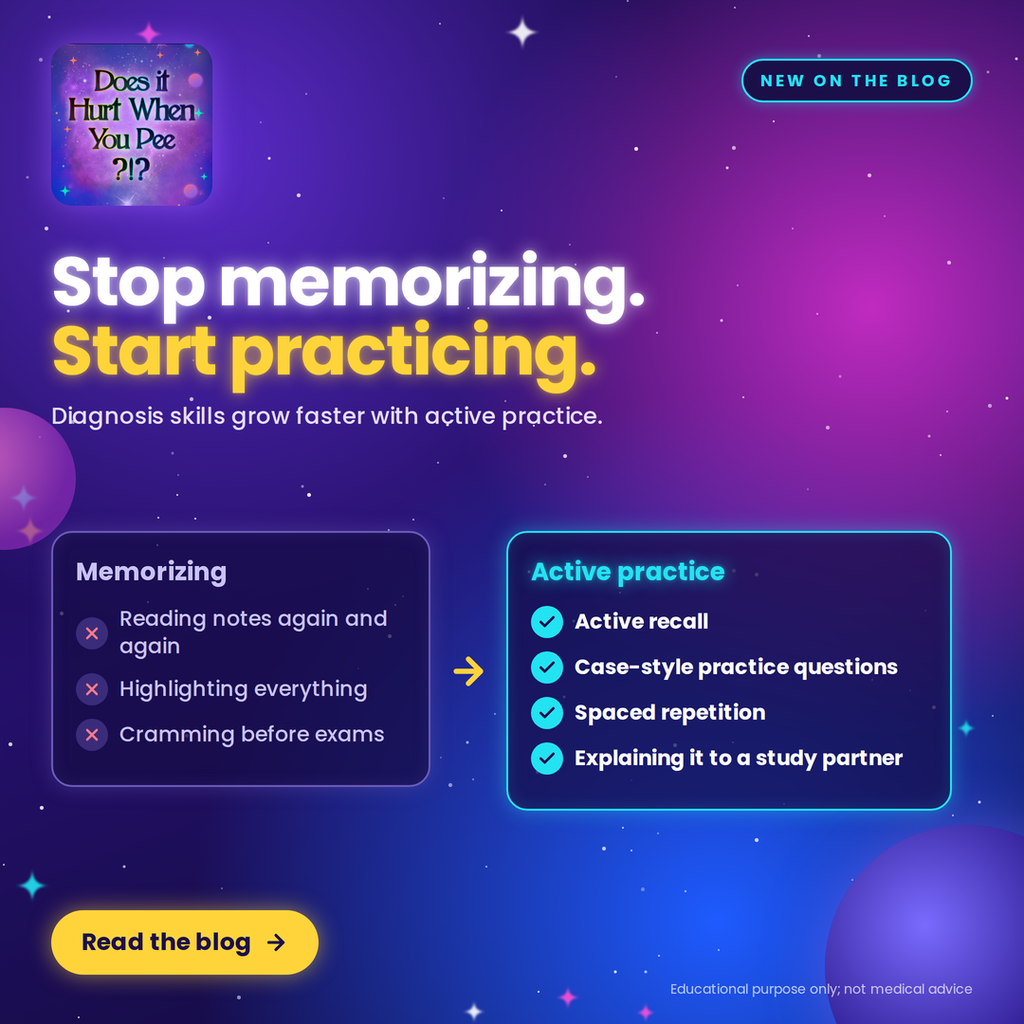
- Active recall: Close your notes and explain a condition from memory.
- Practice questions: Answer case-style questions and review why each answer is right or wrong.
- Spaced repetition: Review topics over days and weeks instead of all at once.
- Case practice: Work through symptoms step by step to reach a likely diagnosis.
- Teach someone: Explaining a topic to a study partner reveals gaps in understanding.
Make Practice Short and Regular
Short, frequent study sessions are often more effective than long, occasional ones. Ten or fifteen minutes of focused case practice each day helps you build skills steadily without burnout.
Turn Practice Into a Game
Practice is easier to keep up when it is fun. Does It Hurt When You Pee?!? turns diagnosis practice into quick game rounds: read the symptoms, beat the timer and choose the right diagnosis. It is a simple way to add active practice to a busy day.
Conclusion
Memorizing facts is a starting point, but active practice is what builds real diagnostic skills. By testing yourself, practicing cases and studying in short, regular sessions, you will remember more and feel more confident when it counts.