
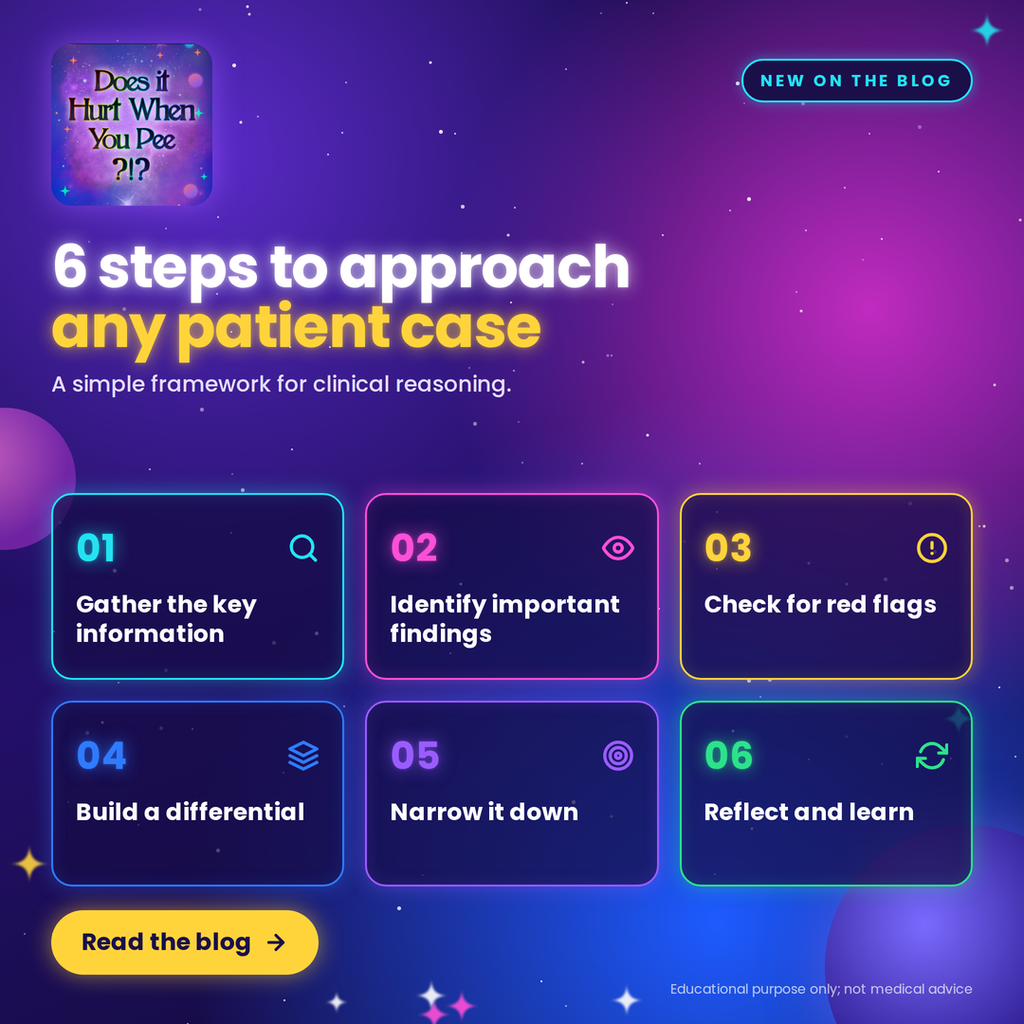
Facing a patient case for the first time can feel overwhelming. There is a lot of information, and it is not always clear where to start. Clinical reasoning is the process of turning that information into a sensible plan. This simple framework can help students approach cases with more structure and confidence.
Step 1: Gather the Key Information
Start with the patient’s main concern and history. When did symptoms start? What makes them better or worse? What is their medical history? Clear information is the foundation of good reasoning.
Step 2: Identify the Most Important Findings
Not every detail is equally important. Highlight the key symptoms and signs that stand out. Grouping related findings together helps you see patterns.
Step 3: Check for Red Flags
Always ask whether anything suggests a serious or urgent problem. Recognizing red flags early is one of the most important habits in clinical practice.
Step 4: Build a Differential Diagnosis
List the possible conditions that could explain the findings, starting with the most likely and including any that are serious and must not be missed.
Step 5: Narrow It Down
Consider which findings support or argue against each possibility. Think about what additional questions, examinations or tests would help clarify the picture, following your program’s guidance.
Step 6: Reflect and Learn
After each case, review your reasoning. What did you notice early? What did you miss? Reflection turns every case into a learning opportunity.
Practice Makes It Natural
- Work through practice cases regularly
- Say your reasoning out loud or write it down
- Discuss cases with classmates or mentors
- Use quick case games to practice pattern recognition
Does It Hurt When You Pee?!? offers short, case-based game rounds that let learners practice this kind of thinking in a fun way.
Conclusion
Clinical reasoning is a skill that grows with practice. By gathering information, focusing on key findings, checking for red flags and building a clear differential, students can approach every case with more confidence.